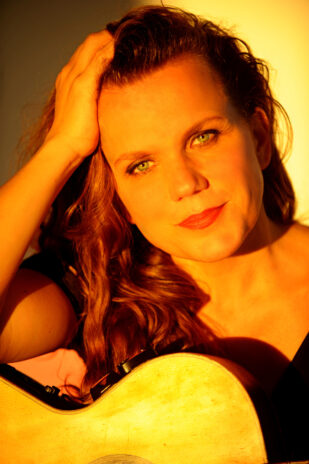
Elis Lovrić (Istria, Croatia)
Born in the Mediterranean historic city of Pula (Istria, Croatia), Elis Lovrić grew up in the nearby town of Rabac in a multi-linguistic environment. Her mother tongues were Labinjonski and Istro-Veneto while she absorbed Croatian and Italian from radio, TV and playing with neighbours. Her fascination for languages and her facility of learning them made her later fluent also in German and English. Her childhood dream was either to participate at the Olympic Games in gymnastics or ice skating or to become a singing and dancing film actress.
Without formal training, she won a local gymnastics competition. To get closer to her music dream, she took the flute of her brother and annoyed her family by playing without interruption a self-composed song hundreds of times (to perfect herself). Despite being excellent in mathematics, she tried at the age of 17 after her school leaving examination something nearly impossible. Not informing her parents, she applied at the demanding Zagreb Academy of Dramatic Arts – and passed. That moment repeated itself throughout her life, she always passed even the most demanding examinations. Her first leading roles at the National Theatre came while still being a theatre student and soon she was asked to be the main actress in a short film, which later grew into a significant feature film.
Feeling too much like a bird in a semi-open cage, she applied for admission to the “Accademia Nazionale d’Arte Drammatica Silvio D’Amico” in Rome. There she fine-tuned her Italian language and acting skills, always accompanied by her “best friend” – her guitar. She decided to unite her two passions and talents through musical-theatrical performances, first in clubs and cultural centres, and later in renowned venues. She also received the prestigious “Premio alla vocazione” acting award and performed in plays and musicals, including an internationally acclaimed musical featuring two Oscar Award winners.
One day, while sitting together with friends for her birthday party, she felt a profound turning point. In front of everyone, she argued “From now on, music will be my life.” A friend told her, the world didn’t need another copy but something authentic only she could offer – her own voice. She understood: to follow her culture by singing in a language no one had ever sung in before – her native Labinjonski. Instead of “All roads lead to Rome” a sort of “All roads start with Labinjonski”.
Years of hardship followed with such an approach far away from mainstream. She struggled to find a producer and a manager willing to follow her vision. The breakthrough came when she found a studio that accepted her dream and offered her the possibility of creating her own label – while performing in Brazil, she presented her first album. The evening of the 31 January 2018 became then the key moment in her career: the packed concert hall of the Croatian Music Institute cherished her in Zagreb. Since then, she has become one of the most popular Croatian singer-songwriters.
She is now performing her songs in 15 languages (Croatian, Czech, English, French, Gaelic, German, Hungarian, Italian, Istro-Veneto, Japanese, Labinian, Osaka-ben, Polish, Portuguese, Slovenian). In addition, she published three books in Croatian, Japanese and Portuguese with her lyrics with translated from Labinian. She toured around the world, was recently in Japan where she sang in the local language. Being a convinced European, she is also one of the rare artists who performed at both seats of the European Parliament (Brussels, Strasbourg). All of this resulted in albums and singles, many awards at music festivals and recently an international award for special contribution to the arts.
Singing straight from the heart, she shares with the audience what she stands for: empowering women like in the song “All I Really Want” with the refrain “You can cry but you can’t deny your dreams”. She is supporting those who are in the margins, who are confronted with social justice, like in her song dedicated to the uprising of the Labinian miners in 1921. Her peace activism is expressed in the song “No War” which made it to the internal finals of the Croatian Eurovision contest. Her passion are the arts in all its forms, including cinema: Her song “Film Under the Stars” became the official anthem of the Pula Film Festival.
In line with her values, away from the limelights, she regularly gives concerts for humanitarian purposes, like for example for the Association of Cerebral Paralysis (whose members are asked to sing with her on stage), or for oncology patients, or else in old people’s homes, where she sometimes arrives unannounced with her guitar.Through her music, performances and actions, she proves that “impossible” is a word not to be taken as an obstacle but something to be turned into “possible”. As such, she is and remains a model and motivation to many.